
img_uuid or receive status callbacks.Vidu Q3 Reference API for Consistent Video
Access Vidu Q3 Reference through the independent GoEnhance Open API. Supply 1–7 reference images with a prompt, submit an asynchronous video task, then poll with the returned
Get API Key
Build a Vidu Q3 Reference API request
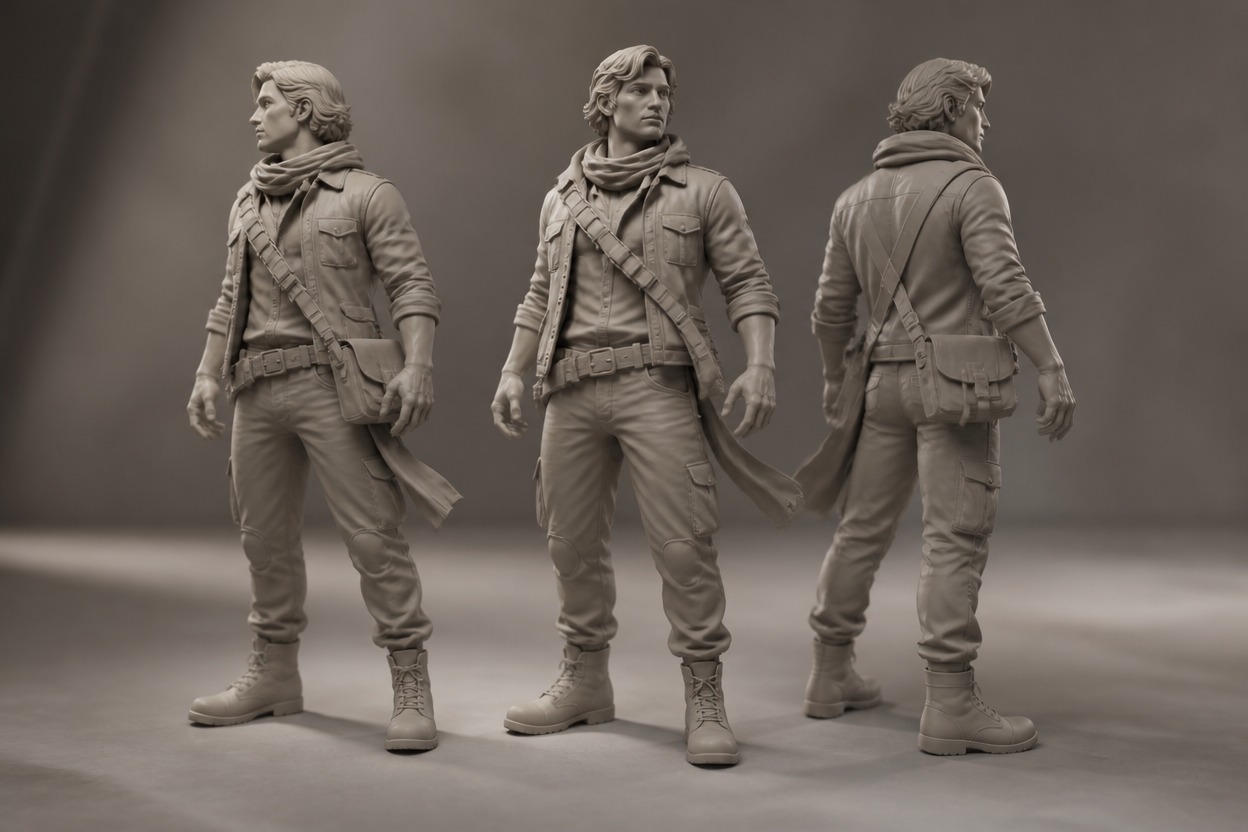
Reference-image input built for consistency
POST to https://api.goenhance.ai/api/v1/videos/generations with model: viduq3_reference, a required prompt, and image_urls containing 1–7 public reference images.
Validated requests and asynchronous results
Validate image format, dimensions, aspect ratio, duration, resolution, and output ratio before submission. Persist img_uuid, then poll GET /api/v1/jobs/detail or use a public HTTPS callback.

Match the documented reference-to-video request schema before submitting a task.
Vidu Q3 Reference API capabilities and limits
Model and prompt
Set <code>model</code> to <code>viduq3_reference</code> and provide the required text prompt describing the intended video.
Reference images
Send 1–7 URLs in <code>image_urls</code>. Each image must be PNG, JPEG, JPG, or WebP; at least 128×128 pixels; no larger than 50 MB; and between 1:4 and 4:1 aspect ratio.
Dedicated input mode
This route accepts <code>image_urls</code>, not <code>image_url</code> or <code>image_end_url</code>. Use <code>viduq3_pro</code> for text-only, first-frame, or start-end-frame generation.
Duration
Choose an integer from 3 through 16 seconds. The documented default is 5 seconds.
Resolution
Select <code>540p</code>, <code>720p</code>, or <code>1080p</code>. The documented default is <code>720p</code>.
Output ratio
Set <code>ratio</code> to <code>16:9</code>, <code>9:16</code>, or <code>1:1</code>; the documented default is <code>16:9</code>. <code>aspect_ratio</code> is accepted as a compatible alias.
Estimate cost as the selected per-second rate multiplied by requested duration.
Vidu Q3 Reference API pricing
540p
1.75 tokens per generated second, equal to $0.035 per second at the documented $0.02-per-token rate.
720p
3 tokens per generated second, equal to $0.06 per second at the documented $0.02-per-token rate.
1080p
3.75 tokens per generated second, equal to $0.075 per second at the documented $0.02-per-token rate.
Integrate Vidu Q3 Reference in six steps
1
1. Create an API key
Create a GoEnhance key and send it as a bearer token in the Authorization header.
2
2. Prepare references
Host 1–7 compliant reference images at public URLs and decide which visual details the prompt should preserve.
3
3. Validate the request
Set
viduq3_reference, a 3–16 second duration, a supported resolution, and a supported ratio. 4
4. Submit the task
POST to
/api/v1/videos/generations and persist the returned img_uuid. 5
5. Track status
Poll
GET /api/v1/jobs/detail or configure a public HTTPS custom_callback_url. 6
6. Handle completion
Process success and failure states idempotently, then verify the generated asset before downstream use.
Build repeatable reference-to-video workflows around explicit inputs and terminal task states.
Developer use cases for the Vidu Q3 Reference API
Character-led campaign clips
Carry approved fictional characters or talent references into short campaign-video concepts.
Product identity sequences
Use multiple approved product views as visual references for motion-focused creative exploration.
Story continuity
Reference recurring subjects when generating separate shots for storyboard and previsualization workflows.
Localized creative variants
Reuse approved visual references while adapting prompts for regional campaign concepts.
Style-consistent social assets
Build short-form video pipelines around a controlled set of visual references and output ratios.
Creative prototyping
Test reference combinations, prompts, durations, and resolutions before committing to a wider production workflow.
Answers to common pricing, reference-input, asynchronous-task, and ShengShu API questions.